Impressions vs Results: Why Measuring OOH Is No Longer Just Counting Screens
For years, the question that defined a good out-of-home campaign was simple: how many people saw it? Impressions, reach, frequency. Those numbers used to be enough to justify the spend. Today, impressions are just the starting point for verifying the real value of out-of-home media. Here's why.
Impressions Alone No Longer Cut It
The global OOH industry is having this conversation right now, and it's not a coincidence. Marketing budgets are under more scrutiny than ever, and every channel has to show what it delivered, not just that it ran.
Within DOOH, the programmatic slice (pDOOH) reached $2.1 billion globally in 2025 — 8.4% of total DOOH spend. In the US alone, forecasts put Programmatic OOH spend above $1 billion. More programmatic investment means more pressure to prove results, not just delivery.
An Impression Doesn't Translate Into Results
Think of it this way: impressions only show delivery. They confirm the screen turned on and the ad ran. They don't tell you whether that buy actually did anything.
Proof is something else: it's understanding whether that exposure drove a store visit, a search, a conversion, a real change in someone's behavior.
That doesn't mean impressions stop mattering. They're still the foundation — without confirmed delivery, there's nothing left to measure afterward. But they've stopped being the endpoint of the conversation. They're the starting line.
From How Many People, to Which People
The other fundamental shift is from scale to relevance. For a long time, more impressions meant a better campaign. Today the question has changed: it's not how many people saw the ad, but whether it was the right people, in the place and moment that brand needed to be.
A campaign with fewer impacts but better targeting can outperform one with massive reach and a diffuse audience. But that can only be claimed if there's a way to validate who was actually exposed, not just how many.
Why This Matters Even More in Programmatic
Traditional OOH was built as a scale medium: you buy a location, a timeframe, a format, and trust the impact will be there. pDOOH changes that logic from the ground up. Every impact is bought, delivered, and measured with the same granularity as a digital channel: by time slot, by location, by the real audience present in that moment.
That puts programmatic in a different position relative to this industry demand. It's not a technology that showed up late to the measurement conversation. It's a technology that was born with that conversation built in.
With Taggify, You Get the Data as Concrete Proof
In LATAM, most of the OOH campaign case studies out there show recognizable brands, iconic locations, well-timed cultural moments. What's almost always missing is the result: how much real audience showed up, which time slot performed best, which format outperformed another.
With Métrica, we work with real audiences and analyze their behavior to understand where your campaign performs best, which formats drive the most impact, which audiences respond better, and what hours your audience concentrates in. Because the real value of a medium is proven in the results it can deliver for brands — and that value needs to be provable with transparent numbers that justify the investment.
_Contact us to request a personalized demo for your brand _
More ideas for programmatic DOOH teams
Continue with practical reads on audience intelligence, inventory strategy and measurable real-world media.
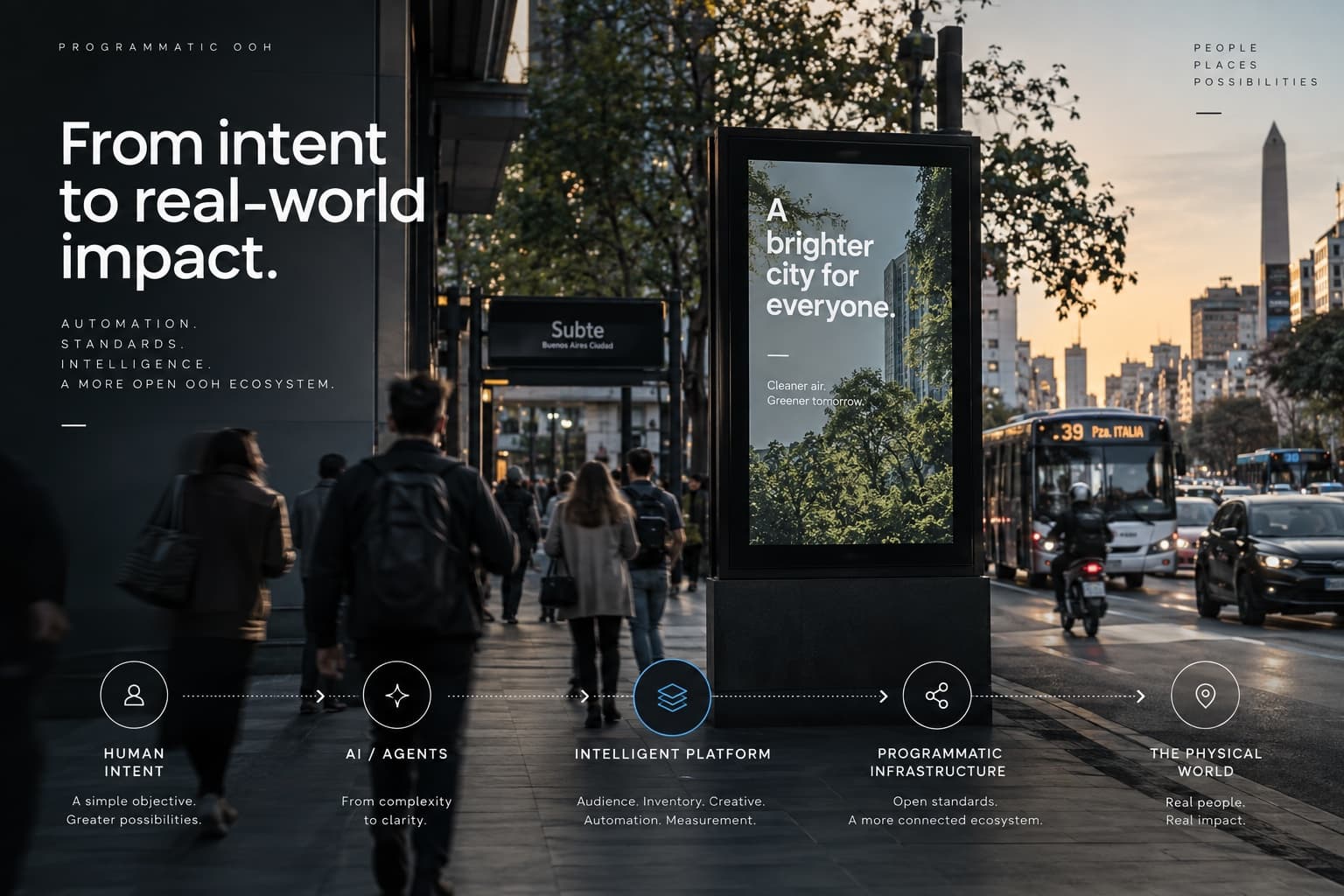
The Next Generation of Programmatic OOH Is Being Built Around Automation, Standards and AI
The Out of Home industry is evolving with a focus on simplifying the ecosystem through automation and standards.
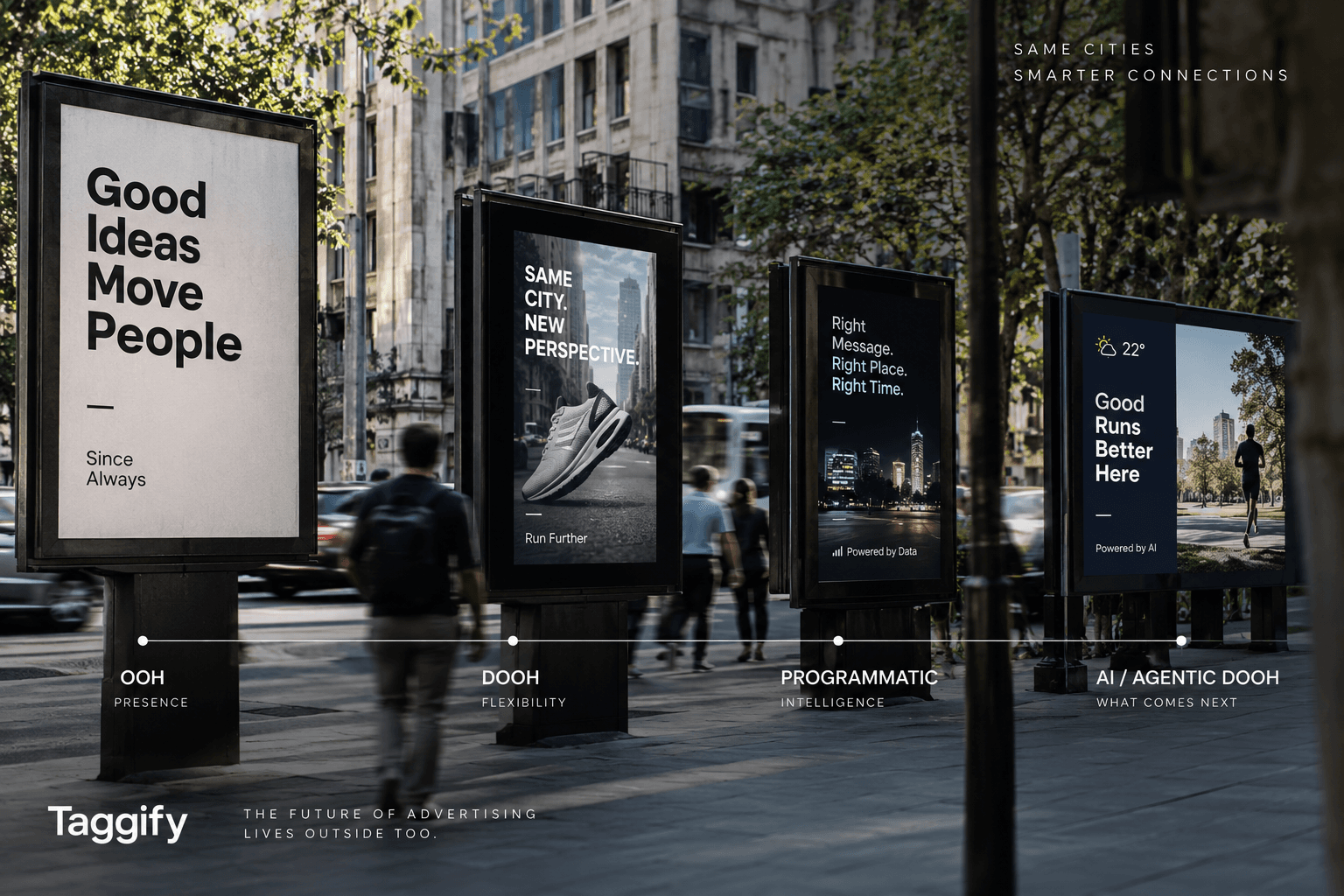
In the Attention Economy, Out of Home Has an Unfair Advantage
Out of Home advertising excels by capturing real-world attention, offering unique advantages in the fragmented media landscape.

The State of Out-of-Home Advertising in 2026
The latest global spending report from WOO (World Out of Home Organization) highlights a significant figure: global OOH closed 2025 at $54.2 billion, a 15% increase from the previous year. This marks the fifth consecutive year of growth for the medium, now accounting for 5.1% of total global advertising investment. However, the interesting aspect is not the total itself. It lies in how that total is composed and what still needs to grow in our region. The world is looking at more screens than ever, and LATAM is just beginning.